

Once again, I'm crammed into three seats on flight 29B of a Hungarian budget airline. Before I switch my smartphone to airplane mode, as the friendly-looking flight attendant advises, I check the geographical location of my AirTag one last time to mentally prepare myself for any potential problems during my layover in Budapest. Traveling around the world by bicycle is regularly a nightmare. While a certain routine does develop, even after years of experience with all sorts of baggage handling, I still don't fully trust the system. Predictably, this trip also ended in an argument at the counter. Not registered, not paid – the usual spiel.
And, given the circumstances, it's hard for me to say this, but the young man simply fell victim to the system at check-in. Not only because the computer decided it wouldn't print a boarding pass without payment for the oversized baggage, but also because I'm sure this man's childhood dreams didn't include dealing with disgruntled passengers day after day, doing a job that's frequently disrupted by strikes because, despite collective bargaining agreements, the pay is barely enough to live on. The thought of how many low-wage workers are involved in the unpleasant transport of my precious belongings makes me dizzy. My trusted flight search engine had simply informed me, without asking, that this leg of the journey would generate around 201 kg of CO2 emissions. You can look at it any way you want, both scenarios are absolutely awful.
 Jannik Schaufler has since moved his life to Girona, Spain | Photo: Simon Gehr
The locator app shows that the bike is near the plane. To unwind a bit and to continue feeding my phone addiction even after activating airplane mode, I browse through my photo album. The first race pictures have already made it into my cloud storage via the old-fashioned route of the granddaddy of social media. Just a few hours earlier, I had participated in a triathlon. Although calling it "just any triathlon" hardly does it justice, just as trivializing it as simply participating.
When I told my grandma (go on, call her!) about this race and she replied in her finest Swabian dialect, "Wo isch däs?" (Where is that?), I described Abu Dhabi's location as the Arabian Desert. So here, in the middle of nowhere, I got my first chance on the world stage. On a Formula 1 track. You couldn't make it up.
 High speed through the packed triathlon season | Photo: Simon Gehr
The United Arab Emirates are living off their oil reserves. To counteract the future depletion of these resources and protect the population from potential losses in prosperity, tourism has been chosen as a means of compensation. As a result, water parks, American hotel chains, and high-speed racetracks are proliferating. However, anyone who knows the country in the Middle East solely through the opulent buildings of Dubai will be surprised: the UAE boasts a fairer distribution of wealth than its German moralizing critics might suggest.
I scroll on. A photo of the final sprint. I mentally relive the competition. I remember the awe that overwhelmed me as I was surrounded by my idols and prepared for the line-up by the officials, the tension that must have been palpable for onlookers when the heartbeat sounded just before the starting gun, and above all, the flow state that set in from that moment on.
I'm satisfied with the result. Although, because this too has happened to me in my career, I know exactly how painful a defeat feels sitting on the 29B course. Having undertaken an expensive journey and then being unable to perform to my potential, I was left with a profound emptiness. Then I sat brooding above the clouds, comforting myself with the memory of other dramas I had been spared. I know of athletes who, in an effort to comply with the race calendar imposed by the world governing body, are now six figures in debt.
 As a professional triathlete in the short distance, Jannik Schaufler competes worldwide for important world ranking points | Photo: Simon Gehr
I zoom in. I still need to get used to the new racing suit. It also meets the standards of the world governing body, supplemented by the requirements of the relevant national sports federation. Both also determine who is ultimately nominated for competitions. The decisive factor is, and remains, the world ranking, for which points are earned through flying in these times of climate change. More money, more flights, more points. My jersey bears a sponsor's logo: There is no planet B.
In my view, this system not only undermines multifaceted aspects of justice, but also contradicts what we, as independent and therefore supposedly self-determined professional athletes, understand by freedom. While for years I believed that freedom is primarily expressed in the greatest possible number of choices and options, today I can pinpoint the true origin of this feeling. Eliud Kipchoge equates it with discipline, and a large majority of endurance athletes, regardless of their performance category, agree. All sorts of gadgets are used to optimize performance and well-being. We time swimming laps, check heart rates, and some even test lactate. We track our progress and rigidly adhere to training plans. We love being in control. For us endurance athletes, this rather peculiar species, that is precisely what freedom is.
 Between training plans, specifications, and data volumes | Photo: Simon Gehr
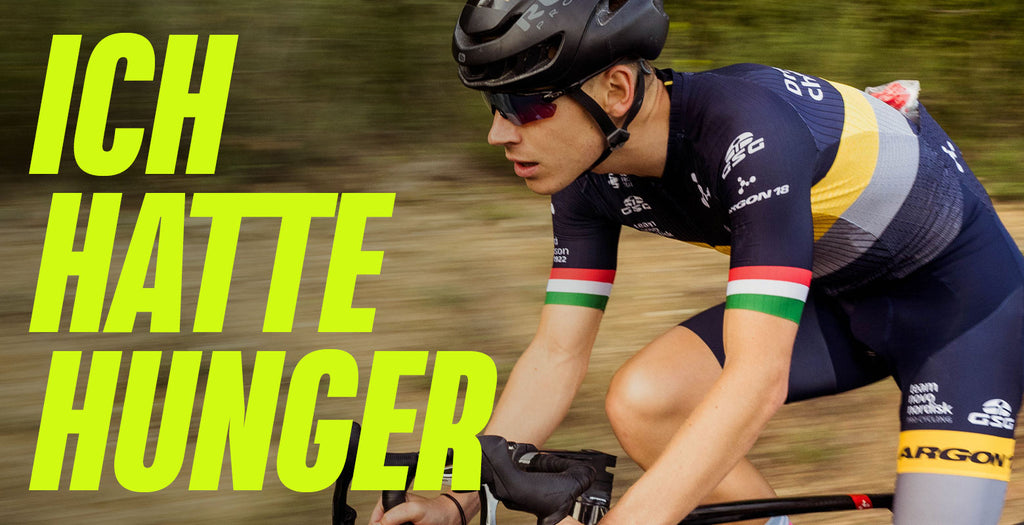
A few years ago, I lost that feeling. At the national training center, a role model during a group training session advised me to change my diet, and even the figurehead of German triathlon, himself an Olympic champion, mentions in his autobiography a strict rice and fruit diet in the lead-up to the Games. Then, every Monday, when we were weighed one after the other in front of the entire team, and our athletic trainer at the time gave me a program that was literally supposed to help me finally get rid of my baby fat, that was it for me. An eating disorder, which I would never publicly call that, meant that I regularly woke up in the night, especially during the intense summer months. I was hungry.
The realization that I was no longer in control of my instincts, coupled with the ominous premonition of losing control over my rest in the coming night as well, caused frustration and, to return to the original theme, a loss of control that made me realize that freedom can also be based on not becoming a slave to one's drives and desires. The feeling of being free is as individual as our life choices. You don't have to be born an altruist to be aware of your privileges. For the vast majority of people, freedom begins when paid work ends. My conversational counterpart at the Wizz Air counter could tell you a thing or two about that.
